






Tyrosine: Key takeaways
- The supplement tyrosine, also known as l-tyrosine, is an amino acid your body uses to make key catecholamines like dopamine and norepinephrine, which are involved in focus, motivation and stress response. [1]
- Research suggests tyrosine is most relevant for mental performance under short-term stress (think sleep loss, intense cognitive load, cold, multitasking), rather than as an everyday “instant nootropic.” [2]
- In controlled studies, tyrosine has been linked to better performance on certain cognitive tasks during stressful conditions. [3]
- On social media, tyrosine has become popular as “liquid Adderall” and a “dopamine booster,” especially in ADHD focused content, allthough it is not a proven ADHD treatment and evidence is limited. [4]
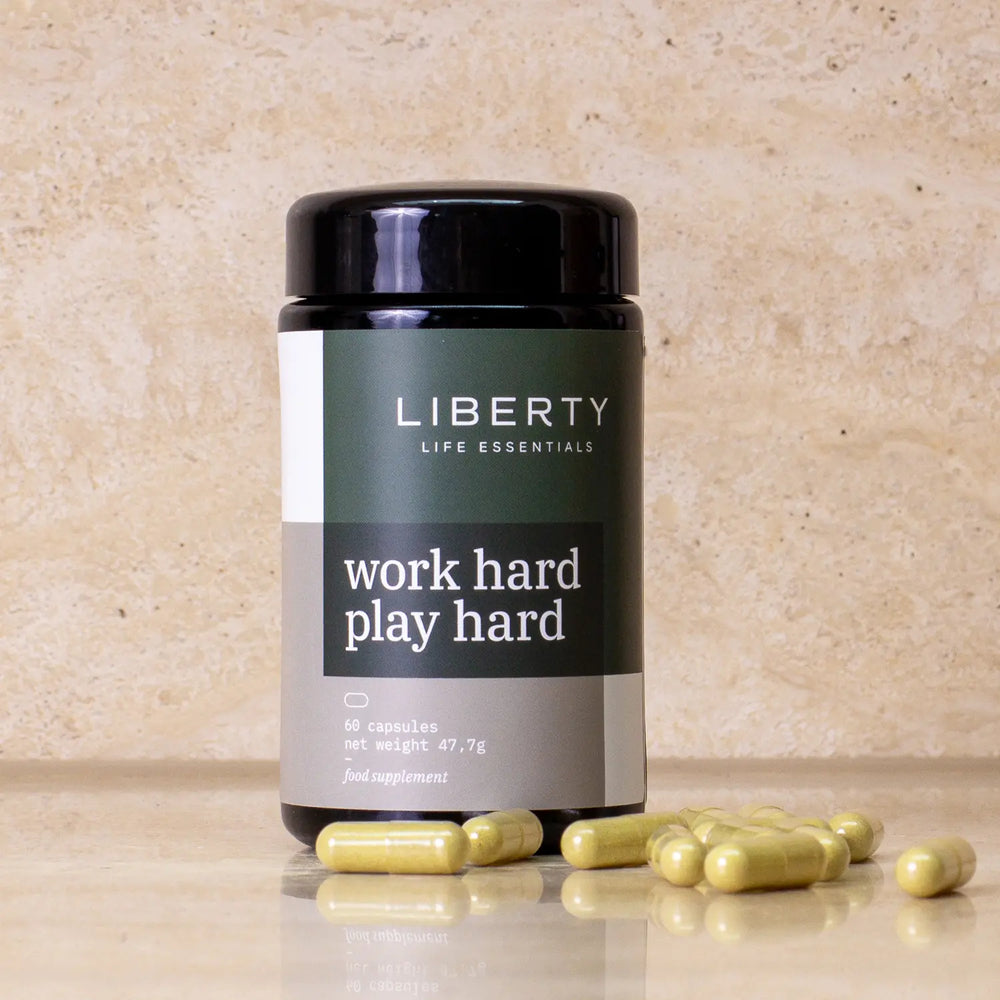
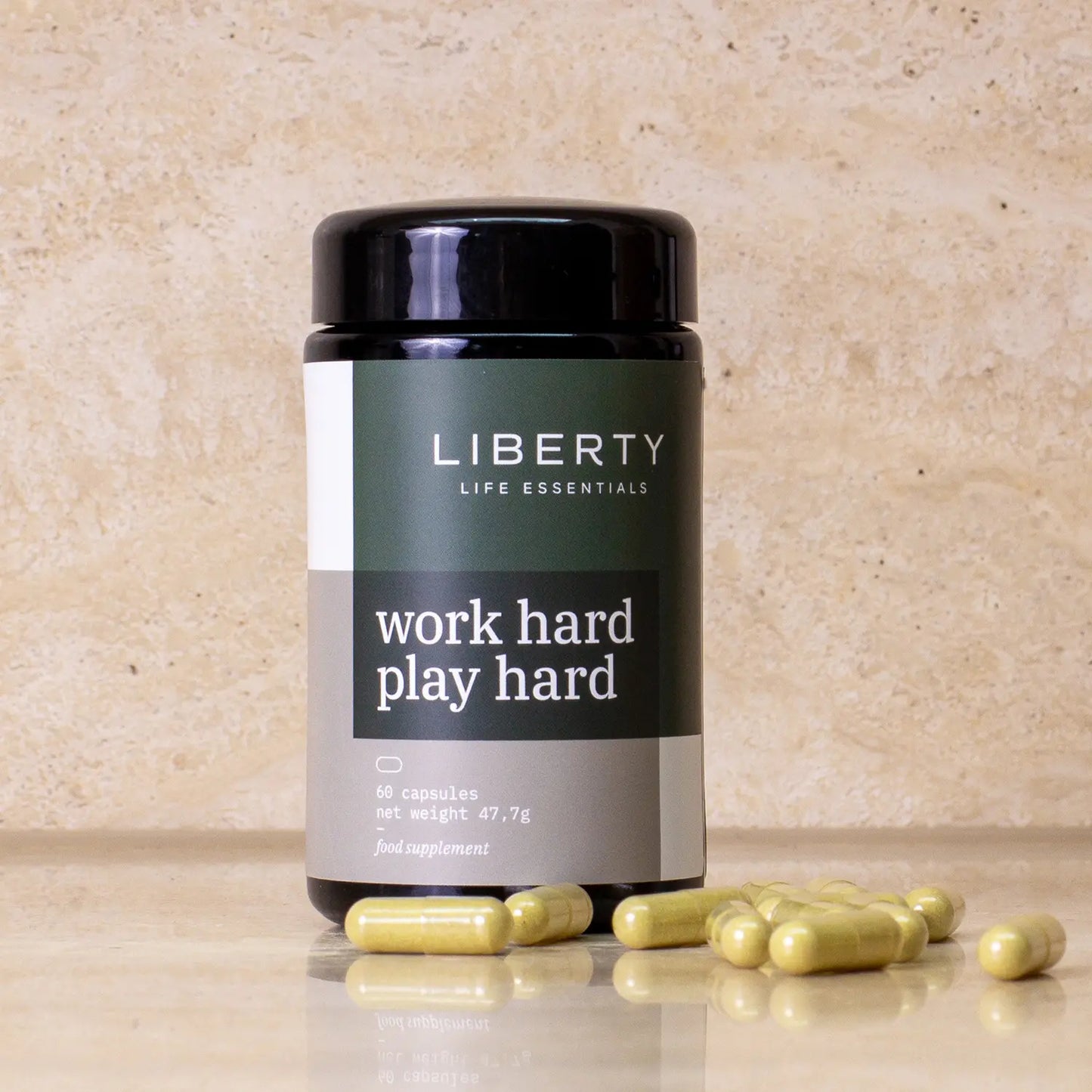
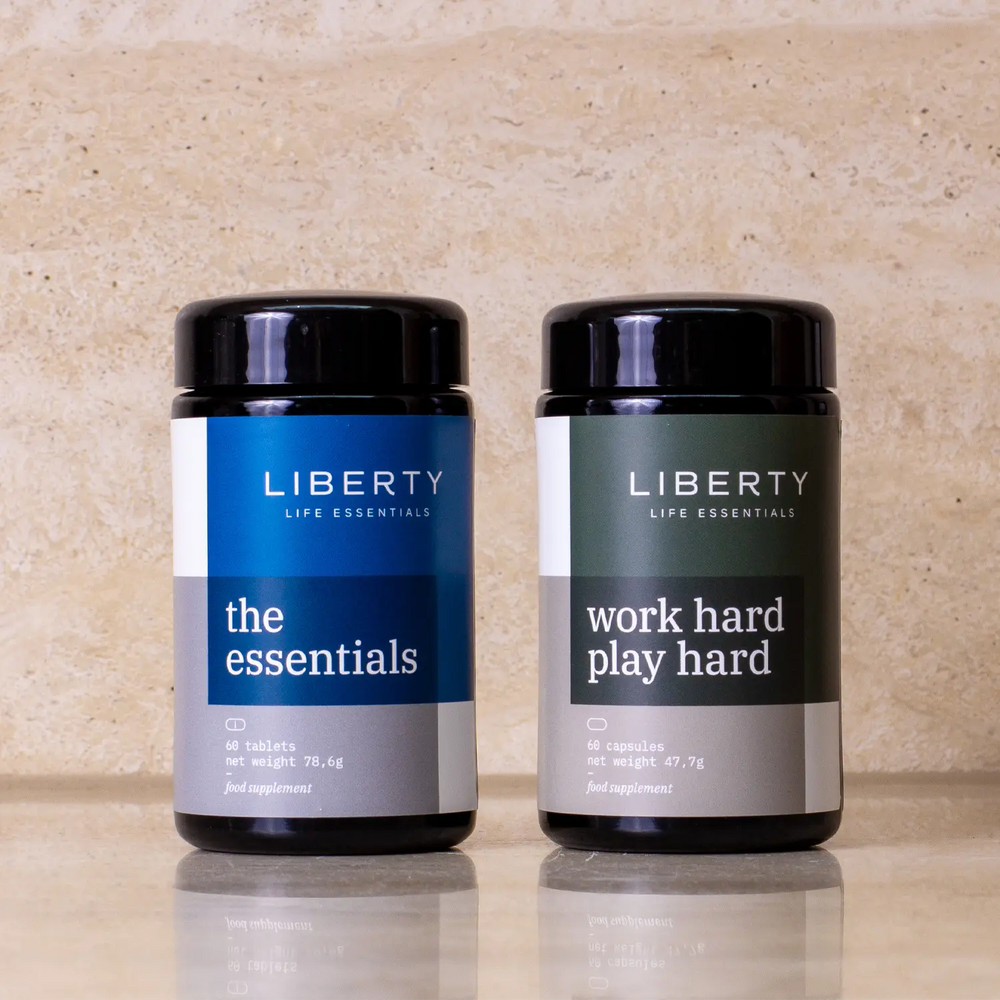
- Liberty's Work Hard Play Hard supplement contains 250 mg N-acetyl-L-tyrosine (NALT), which is a form of tyrosine which claims higher bio-availability than regular tyrosine. [5]


What is tyrosine?
Tyrosine is a protein-building amino acid. Your body can make it from phenylalanine, and it is also found in protein-rich foods such as soy, chicken, dairy or lentils. What makes tyrosine interesting for high performers is that it is an important catalyst for the body to produce dopamine and norepinephrine, which play a key role in alertness, focus and how you handle pressure. [1]
Recently, tyrosine has had a big moment on social media because it is often framed as a “dopamine supplement” or “liquid Adderall.” That framing is catchy, but it is also misleading: the strongest evidence is not that tyrosine turns you into a different person, but that it may help you stay sharper when your system is temporarily pushed (stress, fatigue, demanding tasks). [2] [4]
Benefits
- Supports mental performance under stress
- Supports focus and cognitive flexibility
- Supports mood and stress response
- Supports the body’s catecholamine production pathway
- Supports performance during sleep loss or intense workload
- Might support attention in ADHD (evidence is limited)
Supports mental performance under stress
Tyrosine is mainly used for moments where your brain is asked to do more than usual: long days, hard decisions, high pressure meetings, or mentally demanding work when you are not at your best.
A scientific review concluded that tyrosine can enhance cognitive performance particularly in short-term stressful and cognitively demanding situations, and that benefits are more likely when stress temporarily depletes catecholamine activity. [2]
Supports focus and cognitive flexibility
Focus is not just staying on task, it is also switching tasks efficiently, filtering distractions, and keeping performance steady when pressure rises.
Controlled human research has linked tyrosine intake to improved performance on specific cognitive tasks, including tasks measured after acute dosing during stressful conditions. [3]
Supports mood and stress response
Many people take tyrosine because they associate dopamine and norepinephrine with drive, motivation and mood. In real life, this often translates into wanting to feel more “on” during demanding weeks.
Mechanistic and clinical discussions suggest tyrosine’s most plausible mood related value is indirect: helping support neurotransmitter production when your stress load is high. [1] [2]
Supports the body’s catecholamine production pathway
This is the most factual, least hyped way to describe tyrosine: it is a starting material the body uses to produce catecholamines, which is especially relevant when neurons are overly active and demand is higher.
Raising brain tyrosine can stimulate catecholamine synthesis, particularly in actively firing neurons, which helps explain why effects are often studied under stress rather than in totally normal conditions. [1]
Supports performance during sleep loss or intense workload
When you are sleep deprived or mentally overloaded, the goal is not “more energy,” it is fewer mental mistakes: better information processing, fewer lapses, and more stable decision-making.
The evidence base overall suggests tyrosine is most likely to show benefits when performance is at risk (fatigue, stress, high cognitive demand), rather than when everything is already optimal. [2]
Might support attention in ADHD (evidence is limited)
Tyrosine is sometimes discussed in ADHD conversations because it is a building block for dopamine and norepinephrine, two messengers involved in attention and motivation. That is also why it has been trending on social media as a “natural ADHD hack”, even though it should not be seen as a replacement for evidence-based ADHD care. [1] [2] [4]
When you look at the actual research, the evidence is small and older. An 8-week open trial in adults with attention deficit disorder reported that some participants improved early on, but the study design was not strong enough to prove cause and effect. [6] A small single-blind study in children with ADD with hyperactivity also explored tyrosine, again with very limited sample size and methodology by today’s standards. [7] Reviews of the broader tyrosine literature generally conclude that tyrosine’s clearest value is supporting cognitive performance under acute stress, rather than being a proven long-term intervention for ADHD symptoms. [2]
Recommended dosage
- In studies, tyrosine is often used as an acute dose before a stressor, with common ranges between 200 and 1,000 mg. [2]
- Liberty uses 250 mg N-acetyl-L-tyrosine (NALT) per daily serving in Work Hard Play Hard as part of a broader “calm focus + resilience” stack, where it interacts with other focus supplements such as ashwagandha, l-theanine and brahmi. [5]
- Practical tip: tyrosine is not a “more is better” ingredient, and it tends to be most effective in moments of need (lack of sleep, high workloads, pressure moments). [2]
Safety & interactions
- Tyrosine is generally well tolerated, but rare cases have reported nausea, headache or feeling overstimulated at higher doses (1,000mg<). [6]
- Use extra caution if you take thyroid medication, MAO inhibitors, or levodopa, as tyrosine can interact with these pathways. [6]
- If you are pregnant, breastfeeding, have thyroid issues, migraine sensitivity, or use prescription medication, check with your doctor before supplementing. [6]
Why has tyrosine become so popular on social media?
Because it is often framed as “liquid Adderall” or a “dopamine booster,” especially in ADHD content, even though it is not proven as an ADHD treatment. [4]
Is tyrosine a stimulant like caffeine?
No, it is not a stimulant, but it can feel more “activating” for some people because it supports pathways involved in alertness and stress response. [1]
When is tyrosine most useful?
It tends to make the most sense when your performance is under pressure: sleep loss, heavy cognitive load, stress, or demanding multitasking. [2]
How quickly does tyrosine work?
Many studies look at effects within hours after an acute dose, especially when suffering from high stress, lack of sleep or general fatigue. [2]
What is the difference between L-tyrosine and N-acetyl-L-tyrosine (NALT)?
They are closely related forms. N-acetyl-L-tyrosine (NALT) is commonly used in supplements due to its claim of higher bio-availability and in turn higher effectiveness. [5]
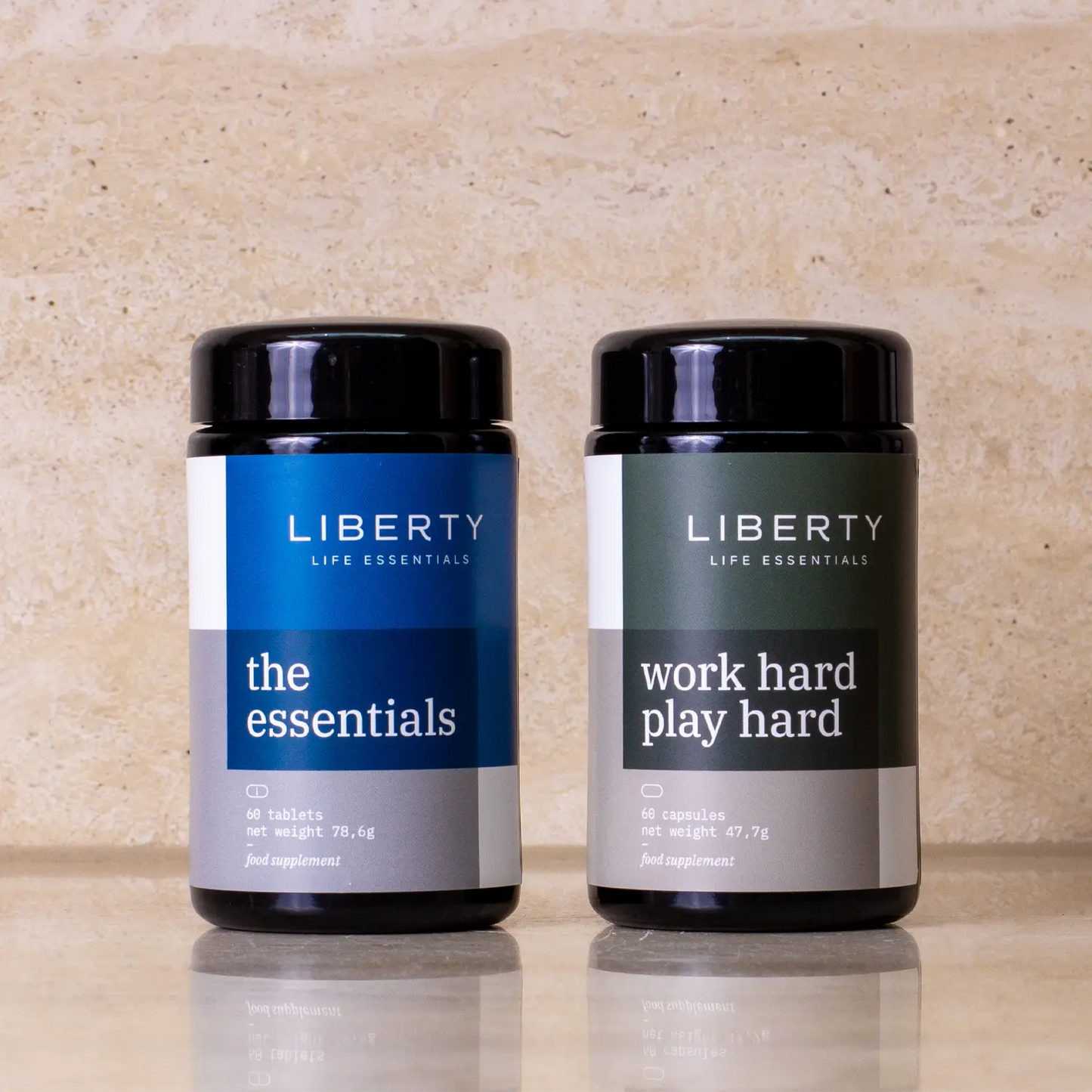
Our tyrosine (NALT) can be found in:




References
- Fernstrom JD et al. - Tyrosine, phenylalanine, and catecholamine synthesis and function in the brain
- Jongkees BJ et al. - Effect of tyrosine supplementation on clinical and healthy populations (review)
- Deijen JB et al. - Effect of tyrosine on cognitive function and blood pressure under stress
- Pagán C. - Is L-Tyrosine Really like “Liquid Adderall”? ADHD Experts Explain (social media context)
- Liberty Life Essentials. Work Hard Play Hard nutritional information
- Cleveland Clinic Health - L-Tyrosine benefits and interactions (thyroid meds, MAOIs, levodopa)
- European Commission - EU Register on nutrition and health claims (tyrosine entries)
- FDA - DSHEA disclaimer and dietary supplement rules